
Grief in the Summer Months: A Conversation with Amber Jeffrey
Amber is the founder of The Grief Gang, a community built to normalise grief through its online community, workshops, mentoring and signature podcast.
After her mum died suddenly in 2016, Amber struggled to find support that actually helped. So, she started a podcast instead, opening up a conversation that wasn't really happening yet. Seven years on, that podcast has grown into a full community: workshops and events, one-to-one mentoring and now a membership, all built around supporting people through grief.
The Grief Gang is one of our valued partners at The Hearth, and we sat down with Amber to talk about grief in the summer months — the particular pressure of loss when the world around you is blooming, and what she's learned about holding both light and heaviness at once.
In the summer, there's such an expectation to be 'on'. How can people who are grieving navigate that?
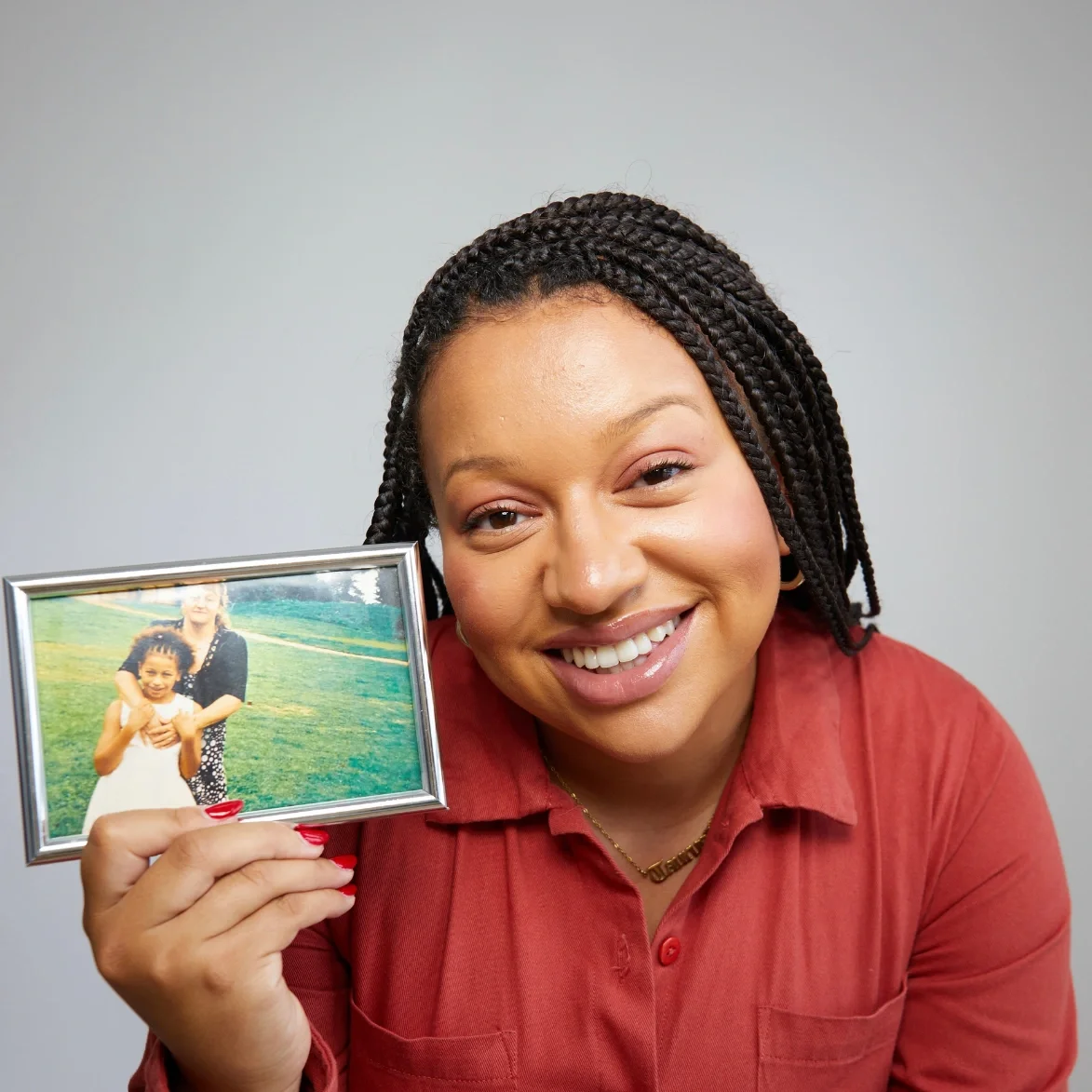
Amber and her mum, Susan, on Mother’s Day 2016
My mum's anniversary is in June, so I often call it my metaphorical or internal winter.
I love summer; I'm a spring baby, but my relationship with it has changed. The day she died was the most beautiful, sunniest day, and now every year when the weather starts turning like this, it reminds me of that scorching day.
There's a push and a pull: you might genuinely want to enjoy your summer, but you don't know how to when you're feeling so sad. If you're feeling that pull, try an oscillation: a weekend with plans, then a day where you let yourself be sad. And if you're on the other side, no desire to be outside or social at all, that's okay too. You're allowed to be in your metaphorical winter and know your bloom might come in the autumn instead. Some people come alive in winter.
I'm the opposite; I'm a deep depresso in the wintertime.
Grief changes your seasonal cycles. I've met people in the community who used to love spring and now avoid it, because it feels like pressure to bloom when they're not ready to. You're learning what the weather seasons mean to you, while also figuring out what your own internal seasons are. That takes time; time is not a healer, but it is your teacher.
A lot of people feel guilty for laughing in a moment of grief, and equally guilty if they can't join in. How do you hold both at once?
That voice, whether it's internal or external, telling you to feel bad for having joy? You need to tell it to shut the fuck up.
I used to guilt-trip myself constantly. How dare I enjoy life, laugh again, be happy, when something so devastating has happened: when my mum can no longer enjoy life.
I used to feel guilty that my mum had a sudden heart attack. I would guilt-trip myself about the cold she had in February, that I didn't force her to get checked out, until I ran that path all the way through to the end. Maybe I could have taken her to get checked out, or maybe she was always going to die; the doctor told me the heart attack had been on the cards for a while.
The moment it switched for me was when I said: I am the most deserving of joy. That's hard to claim, especially as a woman. But I also know the other side of it: the guilt of not living fully, of wanting to bypass the sadness and jump straight to joy. I don't think you can. We have to stand in the rain for a bit, be a bit drenched and a bit sad, before we can really feel the joy on the other side of it.
Are there any rituals that bring you comfort when it comes to grief?
So many rituals. I think ritual can feel like it has to be something big and grand, but the conversations I have in the group circles and membership are usually about the simplest things: being in nature, music, cooking and nutrition. Boring, simple things, but when you do them, you feel it: sleeping right, moving your body, and suddenly your grief feels more bearable.
I think somatic work is one of the most under-discussed parts of grief support. It helps us return to our bodies when grief can make us feel so out of body. Once you build that sense of safety in yourself, it opens up a healthier relationship with your grief. So it's less about rituals for grief specifically, and more about rituals for your own wellbeing that build a foundation strong enough for grief to sit at the table too.
What do you wish more people knew about how to support a grieving friend?
It's a tough gig, first of all. If you're finding it hard, that's okay. You will get things wrong, more than once. Grieving people sometimes play mind games without meaning to, myself included, so you'll come up against thoughts and needs that haven't been communicated to you clearly. You will mess it up at some point. That's genuinely okay. What matters is having the humility to say: I messed up. How can I learn from this?
Comms is so huge. People supporting someone often worry that bringing up their loved one will remind them of the loss, but they never forget. Trust that your friend will tell you if it's too much. It's better to be told no than to never ask.
But you also have your own capacity. You cannot pour from an empty cup. You can't fix someone, and pulling back to look after yourself doesn't make you a monster; it's the oxygen mask principle: put yours on first. You'll do better by yourself and the person you love by looking after you. Women especially are told to just give, give, give, but that's how you end up running on empty and not actually showing up for the person you love. So again, it's the basics: care for yourself in order to care for others.
If you could leave readers with one thing to carry into the season ahead, a permission, a reminder, a kindness, what would it be?
So many permission slips. We do this a lot in Grief Gang: what's your permission slip today? What are you going to permit yourself? I always want people just to permit themselves to speak their names, like to speak their lives.
Permit yourself to never stop talking about them — who your loved one really was, their traits, the parts of yourself you see in them too — even in rooms where you get nothing back. I'll be somewhere, a song comes on, and I'll say, "that reminds me of my mum," then deadpan across the room. I don't care if no one responds. They were so much more than their death and dying.
They were a whole life, and you had a whole life together.
It's a muscle. At first it feels awkward, especially if it's been a long time since you spoke about them. But keep flexing it, even if it's just to yourself. So often, someone's been consumed by illness for so long that who they were before feels far away. Speaking their name is how you claw that back. That's when someone goes, "Oh my God, there they are!" That's why I do what I do.
If you're looking for a space to talk about grief, our Death Café takes place once a month. Head to our events page to see when the next one is.